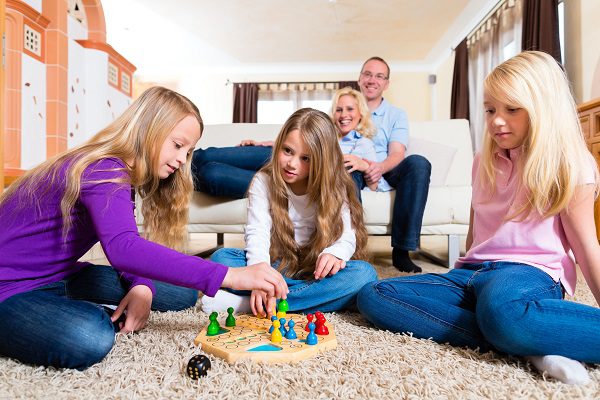
Rainy days can create challenges for families when children have energy but cannot spend much time outdoors. Long hours inside may lead to boredom, screen use, and repeated requests for entertainment.
Learning games can turn indoor time into an opportunity for creativity, movement, problem-solving, reading, and family connection. American parents do not need expensive educational products. Many useful activities can be created with common household items.
The best rainy-day games match the child’s age, interests, attention span, and available space.
Create an Indoor Treasure Hunt
A treasure hunt combines movement, reading, and problem-solving.
Parents can write simple clues.
For younger children, use pictures.
Older children may solve short riddles.
Possible hiding locations include:
Under a chair.
Near a bookshelf.
Inside a toy basket.
Beside a window.
Near a family photo.
Parents looking for creative child learning ideas may find additional inspiration for educational indoor activities.
The final prize may be a small snack, book, or family activity.
Build a Letter Search Game
Write letters on pieces of paper and place them around the room.
Children can search for:
Letters in their name.
Matching uppercase and lowercase letters.
Letters that begin familiar words.
Older children can create words from the letters they collect.
This activity supports language development.
Parents can adjust difficulty easily.
Make a Home Number Challenge
Use household objects for counting.
Children may count:
Blocks.
Spoons.
Books.
Socks.
Toy cars.
Buttons.
Parents can ask:
Can you find five blue objects?
Which group has more?
Can you divide ten items into two groups?
Simple questions support math skills.
Create a Reading Fort
Use blankets, chairs, pillows, and soft lighting to create a reading space.
Children can choose books and spend time inside the fort.
Parents may read aloud.
Older children can read independently.
Add a simple snack or pretend-library activity.
Organized family learning directories may provide more ideas for reading games and indoor education.
The fort makes familiar books feel more exciting.
Play a Memory Tray Game
Place several objects on a tray.
Allow children to look for thirty seconds.
Cover the tray.
Ask them to name the objects.
Increase difficulty by adding more items.
Parents may remove one item and ask what is missing.
This supports attention and memory.
Use safe household objects appropriate for the child’s age.
Build With Recycled Materials
Save clean materials such as:
Cardboard boxes.
Paper rolls.
Small containers.
Paper bags.
Safe packaging.
Children can build:
Houses.
Bridges.
Vehicles.
Animals.
Cities.
Parents may add tape, paper, crayons, and child-safe scissors.
The activity supports creativity and planning.
Create a Simple Science Station
Rainy days are useful for basic science activities.
Children may explore:
Which objects sink or float.
How colors mix.
How ice melts.
Which materials absorb water.
How shadows change.
Parents should supervise and protect surfaces.
Helpful children’s activity and education notes may inspire additional learning games that use everyday materials.
Ask children to predict results before beginning.
Play Word Categories
Choose a category.
Examples include:
Animals.
Foods.
Cities.
Colors.
Sports.
Household items.
Family members take turns naming something from the category.
Older children may use alphabet order.
For example:
Apple.
Banana.
Cherry.
This builds vocabulary and quick thinking.
Create an Indoor Movement Course
Children need physical activity even when indoors.
Use safe items to create stations.
Activities may include:
Walking around chairs.
Jumping between paper markers.
Crawling under a table.
Balancing on a taped line.
Throwing soft balls into a basket.
Clear breakable items first.
Keep movement appropriate for the space.
Play a Sorting Game
Children can sort objects by:
Color.
Size.
Shape.
Material.
Use.
Possible items include:
Blocks.
Socks.
Toys.
Cards.
Craft supplies.
Ask children to explain their categories.
Older children may create their own sorting rules.
Try a Story-Building Game
One person begins a story with one sentence.
Each family member adds another sentence.
The story may become funny or unexpected.
Parents can use prompts:
A dog found a mysterious box.
A family woke up inside a castle.
A robot visited the neighborhood.
Children may draw pictures afterward.
This supports imagination and language.
Build a Pretend Store
Use household products or toys.
Children can:
Create prices.
Use play money.
Count items.
Practice buying and selling.
Organize shelves.
Write receipts.
Older children may calculate totals.
Local community family and learning updates may also provide inspiration for educational activities connected to everyday life.
Pretend play builds communication and practical skills.
Create a Kitchen Learning Activity
Cooking can include:
Counting.
Measuring.
Reading.
Following directions.
Observing changes.
Children may help prepare:
Sandwiches.
Simple baked foods.
Fruit plates.
Snack mixes.
Breakfast items.
Choose age-appropriate tasks.
Parents should supervise closely.
Play Household Bingo
Create a simple grid.
Add items such as:
A red object.
Something soft.
A book.
A spoon.
A family photo.
A toy animal.
Children search the home and mark each item.
Older children can create bingo cards for others.
Use Music and Rhythm Games
Play music and ask children to:
Clap rhythms.
Freeze when music stops.
Move slowly or quickly.
Identify instruments.
Create simple songs.
Household items may become safe rhythm tools.
Music supports listening and movement.
Start a Puzzle Challenge
Families can complete:
Jigsaw puzzles.
Word searches.
Mazes.
Matching games.
Logic questions.
Children may work alone or with others.
Choose difficulty carefully.
A challenge that is too difficult may create frustration.
Create an Art Prompt Box
Write creative prompts on small papers.
Examples include:
Draw a new animal.
Design a dream bedroom.
Create a family flag.
Draw a future city.
Invent a superhero.
Children choose one prompt.
Display finished work at home.
Keep Activities Short
Young children may lose interest quickly.
A fifteen-minute game can still be valuable.
Parents can prepare several options.
Children may move between:
Reading.
Movement.
Art.
Building.
Pretend play.
Variety keeps indoor time interesting.
Allow Independent Play
Parents do not need to lead every activity.
Children benefit from making choices and solving problems independently.
Provide safe materials and allow creativity.
Adults can remain nearby without directing every step.
Independent play builds confidence.
Child learning games for American rainy days can make indoor time useful without creating a school-like atmosphere. Treasure hunts, reading forts, sorting games, building activities, movement challenges, and storytelling encourage learning through play.
Rainy days do not need expensive entertainment. A few household materials and flexible ideas can create hours of meaningful activity while helping children practice skills naturally.